

General Audience: Key Considerations When Looking for Gonadorelin 5mg for Sale
Searching for Gonadorelin 5mg for sale can often lead individuals through a labyrinth of choices, each with unique considerations. Gareth Jones, a pharmaceutical researcher noted, “The market for peptides like Gonadorelin can be complex, with variations in quality, price, and legality.”
Understanding these nuances is vital for making an informed decision that aligns with one’s health needs and legal boundaries. Below, we explore key aspects every buyer should evaluate before purchasing Gonadorelin 5mg.
Navigating the Market for Gonadorelin 5mg: Key Factors to Consider

When considering the purchase of Gonadorelin 5mg, the concentration of the peptide solution is of paramount importance. Different suppliers may offer it in various concentrations, which can affect both the price and the dosage required for effective use.
Moreover, Gonadorelin’s stability under different storage conditions is another critical aspect. A representative from the International Peptide Society stated, “Peptides like Gonadorelin require precise storage to maintain their efficacy, which not all suppliers can guarantee.”
gonadorelin 5mg for sale Therefore, buyers should inquire about the stability data and recommended storage practices from the supplier, ensuring that the product remains effective over time. This level of diligence is crucial for anyone looking to implement Gonadorelin into their regimen.
Assessing the Quality and Purity of Gonadorelin 5mg Products
The quality and purity of Gonadorelin are perhaps the most critical elements determining its efficacy and safety. The presence of impurities can significantly impact the expected physiological response and may lead to unintended side effects.
All reputable suppliers should offer a Certificate of Analysis (CoA) as a transparency measure, detailing the purity levels and the presence of contaminants. According to a recent survey, 84% of peptide users consider a CoA to be a non-negotiable factor when purchasing peptides.
Prospective buyers are advised to seek out vendors who utilize third-party lab testing for their products. This practice ensures an unbiased confirmation of the Gonadorelin’s quality. Independent lab verification can provide the peace of mind that the purchased peptide meets the claimed standards.
Legal and Safety Aspects of Purchasing Gonadorelin 5mg
Purchasing Gonadorelin 5mg is subject to varying legal considerations depending on geographic location and intended use. It’s paramount to verify that Gonadorelin is legal to buy and use in your region, as regulatory frameworks differ worldwide.
Another aspect to consider is the intended use of the peptide, which could be research, therapeutic or other applications. A compliance officer comments, “Understanding the legal implications of Gonadorelin’s intended use can preempt legal complications.” This knowledge can protect the buyer from unintentional legal infringements.
Familiarize yourself with the regulatory guidelines and standards applicable to Gonadorelin to ensure that all legal and safety requirements are met. Purchasing from suppliers who are open about their compliance with regulations can also help avoid potential legal issues.
Identifying Reliable Suppliers for Gonadorelin 5mg Online

Finding a trustworthy supplier for Gonadorelin 5mg online hinges on several factors, including transparency, customer reviews, and industry reputation. Transparency, in particular, is a telltale sign of reliability; look for suppliers that provide exhaustive product details and customer service.
Customer reviews and testimonials offer an unfiltered glimpse into others’ experiences with a supplier. A study from the Consumer Trust Index indicates that 76% of consumers trust online reviews as much as personal recommendations—a vital statistic in gauging vendor reliability.
Evaluating a supplier’s reputation within the industry and presence in professional networks can provide further assurance of their legitimacy. Engaging with community forums and speaking with industry insiders can give additional insights into the best sources for Gonadorelin 5mg.
Ultimately, selecting the right supplier of Gonadorelin 5mg involves careful consideration of quality, legality, and reputability. By researching thoroughly and demanding transparency, you can make an educated choice that prioritizes both effectiveness and adherence to safety regulations.

Why most mental health clinics fail within 5 years — and the operational gaps nobody talks about
Key takeaways
- Prior authorization reform is now live: under CMS-0057-F, payers must issue urgent decisions within 72 hours and standard decisions within 7 calendar days — but faster responses only benefit clinics whose submissions are already clean.
- Becker’s Behavioral Health documented 18 behavioral health closures in 2025 and a further wave in 2026. The stated causes are consistently financial and administrative, not clinical.
- According to a KFF consumer survey, one in five insured adults who used mental health services reported a denied claim — the same rate as emergency room visits, and substantially above most other care types.
- As of December 2025, 40% of the US population — approximately 137 million people — lives in a Mental Health Professional Shortage Area (HRSA). Clinics that close in those communities are not easily replaced.
- CMS-0057-F Phase 2, requiring FHIR-based Prior Authorization APIs, takes effect January 2027. Whether a clinic’s EHR supports that integration is an operational question that needs an answer now.
The reform that changes the equation
On 1 January 2026, the first operational phase of CMS-0057-F — the CMS Interoperability and Prior Authorization Final Rule — came into effect. According to CMS, covered payers must now issue urgent prior authorizations decisions within 72 hours and standard decisions within 7 calendar days, replacing timelines that commonly ran 14 to 30 days. A second phase requiring FHIR-based Prior Authorization APIs takes effect 1 January 2027.
The reform is real. The relief is not automatic.
A clinic still running disconnected billing systems, manual authorizations workflows, and documentation not structured for payer review will not benefit from faster timelines. It will receive faster denials. The four operational gaps that quietly erode behavioral health clinics — in revenue cycle management, care coordination, documentation, and compliance readiness — were survivable when a prior auth decision took three weeks. They are not, when it takes seven days.
What the closure data actually shows
Becker’s Behavioral Health documented 18 behavioral health closures in 2025 and a further wave in 2026. The stated reasons — financial losses tied to Medicaid billing failures, reimbursement rate cuts, inability to sustain operations — are consistently operational, not clinical. Philadelphia-based Wedge Recovery Centers, which operated seven clinics, closed after three years of financial losses attributable to declining Medicaid enrollment and rising overhead costs. Laurel Ridge Treatment Center in San Antonio lost its Medicare provider agreement after CMS cited failure to comply with health and safety participation requirements, triggering layoffs of approximately 648 employees.
The pattern is consistent. Behavioral health clinic failures are almost never clinical failures. They are systems failures.
According to HRSA’s December 2025 State of the Behavioral Health Workforce report, 40% of the US population, approximately 137 million people, live in a Mental Health Professional Shortage Area. The clinics that close in those communities are not easily replaced.
Gap 1: Billing infrastructure that was not designed for behavioral health
Behavioral health billing operates under a distinct set of rules. Every individual session must independently establish medical necessity unlike most medical specialties, where a diagnosis drives a treatment plan and visit-level documentation faces less scrutiny. Time-based CPT codes such as 90832, 90834, and 90837 are among the most frequently audited in the entire claims ecosystem.
A KFF consumer survey found that one in five insured adults who used mental health services reported a denied claim. An analysis of commercial plan data cited by the American Association of Medical Colleges found that one in five medically necessary behavioral health claims were denied in 2020. The Journal of AHIMA puts the administrative cost to rework a denied claim at $25 for physician practices and up to $181 for hospitals — and a significant share of denials are never resubmitted at all, representing permanent revenue loss.
The clinics most exposed to this gap are those using general-purpose medical billing systems retrofitted with behavioral health fields. The manual workarounds those systems require such as tracking payer-specific authorizations rules outside the platform, managing modifier requirements separately etc. create the coding inconsistencies that produce denials in the first place.
Gap 2: Care coordination that lives outside the clinical record
When care coordination activity runs through spreadsheets, email threads, or staff memory rather than through the clinical record, two things happen simultaneously: outcomes suffer and the documentation that justifies ongoing treatment becomes impossible to produce at the point of need.
Payers reviewing prior authorizations requests are not simply checking whether a service was delivered. They are reviewing whether the clinical rationale — the connection between the intake assessment, the treatment plan, and the current progress note — is legible within the record itself. In multi-provider settings, when a prescriber, therapist, and care coordinator are each documenting in separate systems, that integrated picture cannot be assembled quickly.
What genuinely integrated care coordination looks like in practice — and what it costs when the gaps stay open — is examined in detail in Closing the gaps: how integrated care coordination saves time, money and lives.
Gap 3: Documentation workflows that create payer exposure
Documentation burden is a workforce problem and a compliance problem, and in 2026 they are the same problem. HRSA’s December 2025 State of the Behavioral Health Workforce report identifies reimbursement challenges and clinician burnout as the key provider-level barriers preventing behavioral health clinicians from performing at full capacity. When documentation is slow and structurally incomplete, clinicians spend uncompensated time completing notes after hours — notes more likely to be flagged for missing functional impairment data or measurable progress markers.
Payers are now deploying AI-driven claims analysis to identify notes that lack those specific elements. A progress note missing a functional status update can trigger retroactive denial across multiple sessions. The issue is not note length. It is note structure.
What high-performing clinics do differently is build documentation templates around what payers actually require, not clinical preference alone. Platforms purpose-built for behavioral health, such as integrated care management systems like blueBriX’s behavioral health EHR, are designed to connect clinical documentation, billing, and care coordination in one workflow. That integration is what makes audit-ready notes a standard output rather than a reactive response to a denial.
Gap 4: Compliance infrastructure that responds to policy, not audits
The regulatory environment in 2026 is not stable. The Trump administration announced in May 2025 it would not enforce the strengthened 2024 MHPAEA parity regulations, while regulators simultaneously signaled more aggressive parity audits around non-quantitative treatment limitations — prior authorization criteria, network adequacy, and medical necessity standards. Updated 42 CFR Part 2 rules governing substance use disorder records took full effect February 16, 2026, adding documentation obligations many clinics are still absorbing.
Clinics whose compliance posture is reactive — adjusting workflows after a denial, updating documentation standards after an audit — will consistently be operating behind this curve. A systematic review published in The American Journal of Medicine (Johns Hopkins Medicine, September 2025) found that across 11 behavioral health studies, prior authorization delays are linked to treatment interruptions, higher relapse rates, and worse outcomes for patients with psychiatric illness or substance use disorder. The clinical consequences of compliance failure reach patients before they appear in revenue reports.

What high-performing clinics do differently
The clinics navigating 2026 successfully share a recognizable pattern. Billing tools are designed for behavioral health coding requirements, not adapted from general medicine. Care coordination is visible within the clinical record. Documentation workflows are built around payer review criteria. Compliance infrastructure is maintained by the technology layer, not by manual staff effort.
The common failure is treating each gap as a separate problem requiring a separate tool. The operational fragmentation that results — billing in one system, documentation in another, coordination in a third — is itself what makes the other four gaps permanent.
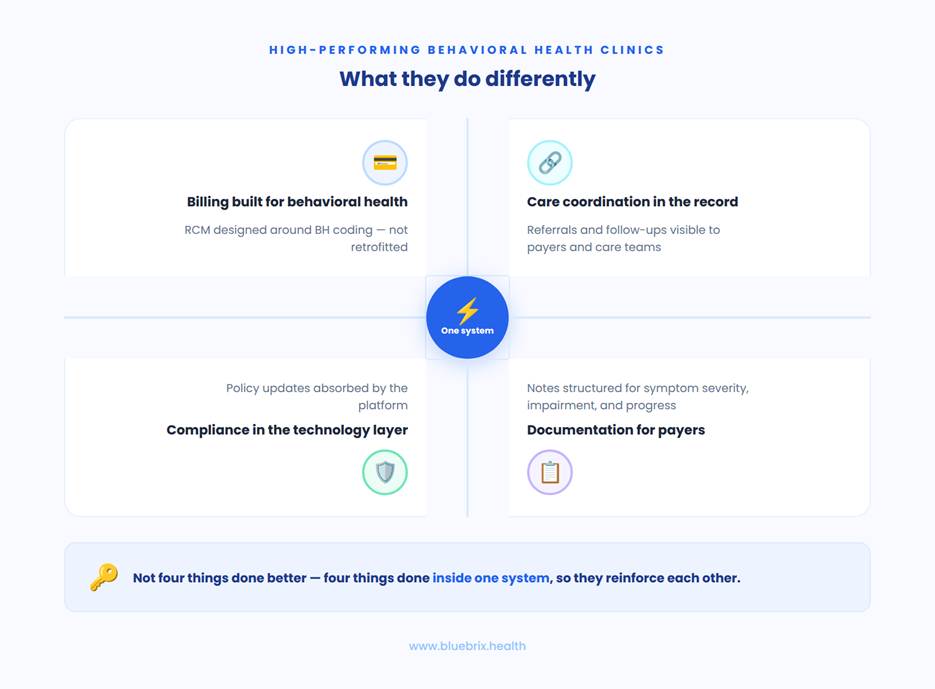
Behavioral health clinic closures are rarely caused by poor care. They are caused by excellent clinical programs built on operational infrastructure that was never designed to sustain them financially. CMS-0057-F’s 2026 deadlines did not create that problem. They removed the buffer that allowed it to persist.
The bottom line
Behind every operational gap is a patient who did not get the care they needed — because a prior auth was delayed, a claim was denied, or a clinic could no longer afford to stay open. The four gaps in this article are fixable. They require deliberate investment in the right infrastructure, not heroic effort from already stretched clinical teams. Getting the operations right is not a business decision separate from the mission. In behavioral health, it is the mission. Recognising which of the four gaps is costing the most is the starting point. Acting on it, with systems designed specifically for behavioral health rather than adapted from general medicine, is what separates the clinics still operating in five years from those that are not.
Frequently asked questions
What does CMS-0057-F require from behavioral health providers in 2026?
The January 2026 phase places obligations on payers, not directly on providers. According to CMS, covered payers must now issue urgent prior authorizations decisions within 72 hours and standard decisions within 7 calendar days, and must give specific denial reasons. The practical implication for providers is that incomplete submissions no longer have weeks to be corrected — documentation must be complete at the point of submission.
Why are behavioral health clinics closing if demand for services is rising?
Rising demand does not protect a clinic with operational gaps. Becker’s Behavioral Health reporting shows closures in 2025 and 2026 are consistently tied to financial and administrative causes — Medicaid billing failures, overhead costs, reimbursement shortfalls — rather than low patient volume. Demand and financial viability are separate variables in behavioral health.
What is the FHIR prior authorizations API requirement and when does it affect providers?
CMS-0057-F Phase 2, effective January 2027, requires covered payers to implement FHIR-based Prior Authorization APIs conforming to the HL7 Da Vinci standard. When operational, providers using a compatible EHR will be able to submit prior authorizations requests directly from their clinical workflow. The question for providers now is whether their EHR will support this integration before the deadline.
How does documentation structure affect prior authorizations outcomes?
In behavioral health, every session must independently establish medical necessity. Payers and their AI-driven review systems are checking for measurable symptom severity, functional impairment data, and documented progress toward treatment goals. A note that is clinically accurate but structurally incomplete is treated as an undocumented service. Note structure — not just content — is a direct revenue variable.
Author Bio

Shahzad Mohammad
Chief Product Officer
Shahzad Mohammad is Co-founder and Chief Product Officer at blueBriX, where he has played a central role in shaping the platform from day one. He helped turn a vision for accessible, customizable digital health tools into reality. Passionate about reducing complexity and empowering care teams, Shahzad focuses on building technology that improves patient outcomes and accelerates healthcare innovation.
LinkedIn Profile: https://www.linkedin.com/in/shahzad-mohammad-7646b014/
Understanding the Connection Between Mental Health and Physical Wellness in Recovery
The Inseparable Bond Between Mind and Body
When you’re working toward recovery from substance use challenges, you might find yourself focusing primarily on stopping the behavior itself. However, your journey involves far more than abstinence alone. Your mental health and physical wellness are deeply interconnected, each influencing the other in ways that can either support or hinder your progress. Understanding this connection gives you powerful insight into creating a sustainable path forward.
Your brain and body communicate constantly through complex networks of neurotransmitters, hormones, and nervous system signals. When substance use disrupts these systems, the effects ripple through every aspect of your health. Depression might manifest as chronic fatigue. Anxiety can trigger digestive problems. Trauma stored in your body might emerge as muscle tension or pain. Recognizing these connections helps you address the whole picture rather than isolated symptoms.
The relationship works both ways. Physical health problems can intensify mental health challenges, creating cycles that feel impossible to break. Poor sleep worsens depression. Chronic pain increases anxiety. Nutritional deficiencies affect mood regulation. When you address both dimensions simultaneously, you create synergistic healing that accelerates your recovery journey.
How Substance Use Affects Your Whole System
Substance use doesn’t exist in isolation within your body. It fundamentally alters your brain chemistry, affecting neurotransmitters like dopamine, serotonin, and GABA that regulate mood, motivation, and stress response. Over time, your brain adapts to these substances, requiring them to feel normal. This neurological adaptation explains why stopping feels so difficult—your brain has literally rewired itself around the substance.
Beyond brain chemistry, substances impact nearly every organ system. Your liver works overtime to process toxins, potentially leading to damage. Your cardiovascular system experiences stress through elevated heart rate and blood pressure. Your immune system becomes compromised, making you more susceptible to illness. Your digestive system struggles to absorb nutrients properly, leading to deficiencies that affect energy, mood, and cognitive function.
The physical toll extends to your sleep architecture. Substances disrupt natural sleep cycles, preventing you from reaching restorative deep sleep stages. Even when you sleep for hours, you wake feeling exhausted because your body hasn’t completed essential repair processes. This sleep deprivation then exacerbates mental health symptoms, creating another reinforcing cycle.
Your endocrine system also suffers significant disruption. Hormones that regulate stress, metabolism, and reproductive function become imbalanced. Cortisol levels may remain chronically elevated, keeping your body in a constant state of stress response. This hormonal chaos contributes to mood swings, weight changes, and difficulty managing emotions.
Common Co-Occurring Mental Health Conditions
If you’re navigating substance use challenges, there’s a strong likelihood you’re also managing mental health conditions. Research consistently shows that the majority of individuals with substance use disorders also experience conditions like depression, anxiety, PTSD, bipolar disorder, ADHD, or OCD. This isn’t coincidental—these conditions often share underlying causes and risk factors.
Depression and substance use frequently occur together, each worsening the other. You might have initially used substances to numb emotional pain or create temporary relief from persistent sadness. Over time, the substances themselves alter brain chemistry in ways that deepen depression. The guilt and shame surrounding substance use add another layer of depressive symptoms. Breaking free requires addressing both the substance use and the underlying depression simultaneously.
Anxiety disorders commonly co-occur with substance use as well. You might have discovered that certain substances temporarily quiet racing thoughts or reduce physical anxiety symptoms. However, as substances wear off, anxiety typically rebounds with greater intensity. Your body develops tolerance, requiring increasing amounts to achieve the same calming effect. Eventually, the substances that once provided relief become a primary source of anxiety themselves.
Trauma plays a particularly significant role in this connection. If you’ve experienced trauma—whether childhood adversity, violence, accidents, or other distressing events—you carry that experience in both your mind and body. Substances often serve as a way to manage trauma symptoms like hypervigilance, flashbacks, and emotional numbness. Effective recovery requires trauma-informed approaches that help you process these experiences safely while building healthier coping mechanisms.
For individuals with ADHD, substances might have initially helped with focus or impulse control. The stimulation or sedation provided temporary relief from ADHD symptoms. Similarly, those with bipolar disorder might have used substances to manage mood swings, either dampening manic energy or lifting depressive episodes. Recognizing these patterns helps you understand your substance use as an attempted solution rather than simply a problem.
The Role of Integrated Treatment Approaches
Traditional approaches often treated substance use and mental health conditions separately, requiring you to navigate different providers, conflicting advice, and fragmented care. Modern understanding recognizes that integrated treatment—addressing both dimensions simultaneously—produces significantly better outcomes. When you receive coordinated care that treats your whole experience, recovery becomes more achievable and sustainable.
Integrated treatment recognizes that you can’t successfully address substance use while ignoring underlying mental health conditions. Attempting to stop substance use without treating depression leaves you vulnerable to relapse when depressive symptoms intensify. Similarly, managing anxiety without addressing substance use means continuing behaviors that ultimately worsen anxiety. Comprehensive programs like those offered at Healing Rock Recovery provide coordinated care that addresses both substance use and mental health conditions through evidence-based therapies and holistic approaches tailored to your unique needs.
Evidence-based therapies form the foundation of effective integrated treatment. Cognitive Behavioral Therapy (CBT) helps you identify and change thought patterns that contribute to both substance use and mental health symptoms. You learn to recognize triggers, challenge distorted thinking, and develop healthier responses to difficult emotions. Dialectical Behavior Therapy (DBT) teaches skills for emotional regulation, distress tolerance, interpersonal effectiveness, and mindfulness—all crucial for managing co-occurring conditions.
Medication-assisted treatment often plays a valuable role in integrated care. Medications can help stabilize brain chemistry, reduce cravings, manage withdrawal symptoms, and treat underlying mental health conditions. When prescribed and monitored by knowledgeable professionals, these medications provide crucial support during early recovery when your brain is healing and rebalancing. They’re not substituting one substance for another—they’re providing medical support for legitimate health conditions.
Physical Wellness as a Recovery Foundation
Your physical health provides the foundation upon which mental health and recovery rest. When your body is malnourished, sleep-deprived, and sedentary, maintaining emotional stability becomes exponentially harder. Conversely, when you prioritize physical wellness, you create conditions that support mental clarity, emotional regulation, and resilience.
Nutrition deserves particular attention during recovery. Substance use often leads to poor eating habits—skipped meals, reliance on processed foods, or simply forgetting to eat. Your body may be depleted of essential vitamins and minerals that affect brain function and mood. B vitamins, omega-3 fatty acids, magnesium, and amino acids all play crucial roles in neurotransmitter production and mental health. Restoring proper nutrition isn’t about rigid dieting—it’s about nourishing your body with foods that support healing.
Regular physical activity offers profound benefits for both mental health and recovery. Exercise stimulates production of endorphins and other neurotransmitters that naturally improve mood. It reduces stress hormones, improves sleep quality, and builds confidence through achievement. You don’t need intense workouts—even moderate activities like walking, yoga, or swimming provide significant benefits. The key is consistency and finding activities you genuinely enjoy rather than viewing exercise as punishment or obligation.
Sleep restoration represents another critical component of physical wellness in recovery. Your body needs quality sleep to repair damage, consolidate learning, regulate emotions, and restore energy. Establishing healthy sleep habits—consistent bedtime routines, dark and cool sleeping environments, limiting screen time before bed—helps your body reestablish natural rhythms. Initially, sleep may remain difficult as your brain adjusts to functioning without substances. Patience and consistency eventually lead to improved sleep quality.
The Power of Holistic and Creative Approaches
While evidence-based therapies and medical interventions form essential components of recovery, holistic and creative approaches address dimensions that traditional methods sometimes miss. These approaches recognize that healing involves more than symptom reduction—it involves reconnecting with yourself, discovering new forms of expression, and finding meaning beyond substance use.
Creative therapies like art and music provide non-verbal outlets for processing emotions and experiences. You might struggle to articulate trauma or complex feelings in words, but expressing them through painting, drawing, or music can access deeper layers of experience. These creative processes activate different brain regions, facilitating healing through alternative pathways. They also help you discover new sources of joy and accomplishment that substance use had overshadowed.
Mindfulness practices teach you to observe thoughts and emotions without judgment or reactivity. Through meditation, breathing exercises, or body awareness practices, you develop the capacity to sit with discomfort rather than immediately reaching for substances to escape it. This skill proves invaluable throughout recovery as you encounter triggers, cravings, and difficult emotions. Mindfulness isn’t about eliminating these experiences—it’s about changing your relationship with them.
Nature connection offers profound healing benefits that complement clinical interventions. Time spent in natural environments reduces stress hormones, lowers blood pressure, improves mood, and enhances overall wellbeing. Whether hiking, gardening, or simply sitting outdoors, nature provides perspective, peace, and reminder that you’re part of something larger than your struggles. The natural world operates in cycles of growth, dormancy, and renewal—a powerful metaphor for your own recovery journey.
Cultural Considerations in Healing
Your cultural background, beliefs, and values shape how you understand health, illness, and recovery. Effective treatment honors these cultural dimensions rather than imposing a one-size-fits-all approach. For many individuals, particularly those from Indigenous communities, culturally grounded healing practices provide essential connections to identity, community, and traditional wisdom.
Indigenous approaches to healing often emphasize balance, connection to community and land, spiritual wellness, and intergenerational healing. These perspectives recognize that substance use and mental health challenges don’t exist solely within individuals—they reflect broader historical trauma, cultural disruption, and loss of traditional ways. Healing therefore involves reconnecting with cultural identity, participating in traditional practices, and understanding personal struggles within larger historical context.
Programs that incorporate culturally specific approaches acknowledge that healing looks different across communities. What works for one person may not resonate with another based on cultural background and beliefs. Culturally competent care means providers understand these differences, respect diverse healing traditions, and integrate them appropriately into treatment plans. This respect for cultural diversity creates space for you to heal in ways that align with your values and identity.
Building Your Support Network
Recovery doesn’t happen in isolation. The relationships and support systems surrounding you significantly influence your success. Building a strong support network involves identifying people who genuinely support your recovery, establishing healthy boundaries with those who don’t, and connecting with others who understand your experience.
Family involvement can be incredibly powerful when approached thoughtfully. Your substance use and mental health challenges have likely affected family relationships, creating patterns of mistrust, enabling, or conflict. Family therapy helps address these dynamics, educating loved ones about addiction and mental health while teaching healthier communication and support strategies. When family members understand your challenges and learn how to help effectively, they become powerful allies in your recovery.
Peer support provides unique benefits that professional treatment alone cannot offer. Connecting with others who’ve walked similar paths reduces isolation and shame. You hear firsthand that recovery is possible because you’re learning from people who’ve achieved it. Peer support groups, whether 12-step programs, SMART Recovery, or other formats, offer ongoing community and accountability. These connections often become lifelong friendships that sustain you through challenges.
Professional support remains crucial throughout your recovery journey. Therapists, counselors, case managers, and medical providers bring expertise and objectivity that complement peer and family support. They help you navigate complex challenges, adjust treatment approaches as needed, and provide evidence-based interventions. The most effective recovery plans combine professional treatment with peer and family support, creating a comprehensive network.
Addressing Barriers to Integrated Care
Despite growing recognition of the need for integrated mental health and substance use treatment, barriers still prevent many people from accessing appropriate care. Understanding these barriers helps you navigate them more effectively and advocate for the care you deserve.
Geographic barriers affect many individuals, particularly those in rural areas. Quality treatment programs may be hours away, requiring transportation, time off work, and childcare arrangements that feel impossible to coordinate. Increasingly, virtual treatment options help bridge this gap, providing access to comprehensive care regardless of location. Telehealth has expanded dramatically, making it possible to participate in therapy, medication management, and even group programming from home.
Financial concerns represent another significant barrier. Treatment can be expensive, and insurance coverage varies widely. However, many programs offer sliding scale fees, payment plans, or accept various insurance types. Don’t let cost assumptions prevent you from exploring options—contact programs directly to discuss financial arrangements. Your health and recovery are worth the investment, and solutions often exist when you ask.
Stigma remains perhaps the most insidious barrier. You might fear judgment from employers, family, or community if you seek treatment. This shame keeps many people suffering in silence rather than reaching out for help. Remember that seeking treatment demonstrates strength and self-awareness, not weakness. Mental health and substance use challenges are health conditions deserving treatment, just like diabetes or heart disease. The more people speak openly about recovery, the more stigma diminishes.
Work and family responsibilities create practical barriers for many individuals. Taking time away from job or family duties feels impossible, even when you desperately need help. Flexible treatment options address this reality, offering evening programming, weekend sessions, or intensive outpatient formats that allow you to maintain work and family commitments while receiving comprehensive care. Recovery doesn’t require putting your entire life on hold—it requires finding treatment that fits your life.
Creating Your Personalized Recovery Plan
Your recovery journey is uniquely yours. While evidence-based practices provide proven frameworks, the specific combination of approaches that works best for you depends on your individual circumstances, preferences, challenges, and strengths. Creating a personalized recovery plan involves honest self-assessment, professional guidance, and willingness to adjust as you learn what works.
Start by identifying your specific needs. What substances have you been using? What mental health symptoms are you experiencing? What triggers or situations increase risk? What strengths and resources do you already possess? This assessment helps determine appropriate treatment intensity—some people need residential care, others thrive in outpatient programs, and many benefit from partial hospitalization that provides structure while allowing you to maintain some normal routines.
Consider what treatment approaches resonate with you. Do you connect with traditional talk therapy, or do creative and experiential approaches feel more natural? Are you interested in medication support? Does cultural or spiritual connection feel important to your healing? There’s no single right answer—effective treatment meets you where you are and incorporates elements that feel meaningful and motivating to you.
Build in flexibility and self-compassion. Recovery rarely follows a straight line. You’ll have days of progress and days of struggle. Setbacks don’t mean failure—they’re opportunities to learn and adjust your approach. The goal isn’t perfection; it’s consistent forward movement even when the path feels difficult. Celebrate small victories along the way, and remember that lasting change takes time.
Moving Forward with Hope and Commitment
Understanding the connection between mental health and physical wellness in recovery empowers you to approach healing comprehensively. You’re not just stopping substance use—you’re rebuilding your health across all dimensions, addressing underlying conditions, and creating a life that feels worth living without substances.
This journey requires courage, commitment, and support. You don’t have to figure everything out alone or have all the answers before starting. Take the first step by reaching out for help, whether that’s calling a treatment program, talking to your doctor, or confiding in a trusted friend or family member. Each small action moves you forward.
Recovery is possible. Thousands of people with co-occurring mental health and substance use challenges have found their way to healthier, more fulfilling lives. You have the same capacity for healing and growth. By addressing both your mental health and physical wellness through integrated, personalized treatment, you create the foundation for lasting recovery and genuine wellbeing. Your story doesn’t end with struggle—it continues with healing, growth, and the discovery of who you are beyond substance use.

Why Athletes Consider Igf Des for Enhanced Performance Monitoring
Athletes are constantly seeking methods to optimize their performance and gain a competitive edge. Among the tools available, Insulin-like Growth Factor DES (Igf Des) has emerged as a noteworthy option, particularly in the realm of performance monitoring. This interest is driven by Igf Des’s potential to influence muscle growth and recovery rates, making it a subject of extensive research in sports science. In this article, we will delve into the reasons why athletes are considering Igf Des for performance monitoring, how it works, and the safety and ethical considerations surrounding its use.
Understanding Igf Des and Its Role in Athletics

Igf Des is a variant of the Insulin-like Growth Factor, which is naturally occurring in the body and plays a crucial role in muscle development and regeneration. This variant is known for its shorter half-life, which allows it to act more quickly and specifically on muscle tissues. Athletes are particularly interested in Igf Des due to its potential to enhance muscle growth and improve recovery times, offering an edge in training regimens.
The scientific community is actively exploring the potential of Igf Des through various research methodologies, including Cohort Study Designs and Preclinical Studies. Such studies aim to validate the efficacy and safety of Igf Des, particularly its role in muscle hypertrophy and recovery.
Moreover, the integration of advanced techniques like CRISPR-Cas9 and Bioinformatics Pipelines in research allows for a deeper understanding of how Igf Des interacts with biological systems at a molecular level, potentially paving the way for more targeted applications in sports science.
How Igf Des Enhances Performance Monitoring
One of the primary reasons athletes consider Igf Des is its ability to enhance performance monitoring. By potentially accelerating muscle recovery and growth, it allows for more detailed tracking of an athlete’s physiological responses to training. This information can be vital for adjusting training regimens to maximize performance gains.
Incorporating Igf Des in a Clinical Trial Management System (CTMS) helps researchers collect and analyze data on its effects systematically. The use of such systems ensures adherence to Good Clinical Practice (GCP), providing reliable and actionable insights into how Igf Des can be used effectively in athletic contexts.
Research into the Igf Des variant illustrates its growing importance, with studies highlighting its unique advantages over other growth factors. These studies often leverage advanced techniques like Longitudinal Study Designs to assess performance improvements over time, providing a comprehensive view of its benefits.
Safety and Ethical Considerations for Igf Des Use
While the potential benefits of Igf Des are compelling, safety and ethical considerations cannot be overlooked. The use of Igf Des must be evaluated by an Institutional Review Board (IRB) or a Research Ethics Committee (REC) to ensure that studies are conducted ethically and that participant safety is prioritized.
Ethical considerations include informed consent and the potential long-term effects of Igf Des use, which must be thoroughly investigated through Randomized Controlled Trials and Double-Blind Studies. These methodologies help establish a robust understanding of both the short-term and potential long-term effects on athletes.
In addition, the integration of Pharmacogenomics and In Vitro Diagnostics (IVD) can offer personalized insights into how individual athletes might respond to Igf Des, further enhancing safety and efficacy profiles. This personalized approach ensures that athletes receive interventions that are tailored to their unique genetic and physiological profiles, minimizing risks.
The Future of Performance Monitoring with Igf Des
The future of performance monitoring in athletics could see significant advancements with the continued research and validation of Igf Des. As research progresses, tools like EHR Integration might enable more seamless and comprehensive monitoring of athletes’ responses to Igf Des, allowing for real-time adjustments in training and recovery strategies.
Biomarker Validation will also play a key role in this future, ensuring that the physiological changes monitored are both meaningful and indicative of true performance enhancements. Such advancements could transform how athletes and coaches approach training, emphasizing data-driven decisions grounded in solid scientific research.
As the body of research surrounding Igf Des grows, it is likely to become a critical component in the toolkit of performance monitoring, offering athletes a scientifically validated method to enhance their training outcomes.
Conclusion

Igf Des holds significant promise for enhancing athletic performance monitoring through its potential to improve muscle growth and recovery. The ongoing research and validation efforts, guided by rigorous safety and ethical standards, offer a glimpse into a future where performance monitoring is more precise and personalized. For those in the field of sports science, Igf Des represents a frontier of innovation in performance enhancement, offering the potential for data-driven improvements in athletic training and outcomes.

Why ScottsdaleAZDetox.com Advocates Holistic Approaches to Mental Health Recovery
As the understanding of mental health continues to evolve, the need for comprehensive and effective treatment solutions becomes increasingly vital. scottsdaleazdetox.com stands at the forefront of this evolution by promoting holistic approaches to mental health recovery. These methods encompass a wide range of therapeutic practices that address the mind, body, and spirit, offering a more nuanced and personalized path to healing. This article will explore why scottsdaleazdetox.com champions holistic solutions, the interplay between mind and body in recovery, the integrative therapies offered, and share real-life success stories from clients who have benefited from these approaches.
Why scottsdaleazdetox.com Emphasizes Holistic Mental Health Solutions

scottsdaleazdetox.com recognizes that mental health recovery is not a one-size-fits-all process. Traditional methods often focus solely on symptom management through psychotropic medications, which, while beneficial, may not address underlying issues. Holistic approaches, such as Dialectical Behavior Therapy (DBT) and Cognitive Behavioral Therapy (CBT), offer alternative ways to understand and treat mental health conditions. These therapies aim to help individuals develop better coping mechanisms, improve emotional regulation, and enhance interpersonal effectiveness. For this reason, scottsdaleazdetox.com emphasizes the importance of Trauma-Informed Care, which acknowledges the impact of past trauma on current mental health.
Furthermore, the center emphasizes the importance of Trauma-Informed Care, which acknowledges the impact of past trauma on current mental health. By integrating this understanding into treatment plans, scottsdaleazdetox.com ensures that each client’s unique experiences are respected and addressed. This comprehensive approach can significantly improve treatment fidelity, ensuring that interventions are consistently aligned with the individual’s needs.
Exploring the Connection Between Mind and Body in Recovery
The relationship between mental and physical health is complex and deeply intertwined. scottsdaleazdetox.com employs therapies that recognize this connection, such as Neurofeedback, a technique that uses real-time monitoring of brain activity to help regulate mental states. This method can enhance the effectiveness of traditional therapies like CBT by providing clients with a clearer understanding of their mental processes.
Mindfulness-Based Stress Reduction (MBSR) is another tool used to bridge the mind-body gap. This practice encourages clients to remain present and aware, reducing stress and enhancing overall well-being. By incorporating MBSR, scottsdaleazdetox.com supports clients in achieving a balanced state of mind, crucial for sustained recovery.
Moreover, Behavioral Activation, which focuses on increasing engagement in positively reinforcing activities, is employed to combat depression and anxiety. This strategy helps clients re-engage with life, setting the stage for a more holistic recovery experience.
Integrative Therapies Offered at scottsdaleazdetox.com
At scottsdaleazdetox.com, a variety of integrative therapies are available to support holistic recovery. One such therapy is EMDR (Eye Movement Desensitization and Reprocessing), which is particularly effective in treating trauma-related conditions. EMDR helps clients process distressing memories, reducing their lingering impact on mental health.
Additionally, the center provides Crisis Intervention Training, equipping clients with the skills needed to manage acute mental health crises effectively. This proactive approach not only empowers individuals but also reduces the likelihood of relapse by preparing them for potential challenges.
Clinical Supervision ensures that all therapeutic practices are delivered with high quality and consistency. This oversight guarantees that clients receive the best possible care, enhancing the overall treatment experience and outcomes.
Client Success Stories Highlighting Holistic Approaches
The effectiveness of holistic therapies at scottsdaleazdetox.com is best illustrated through client success stories. One client, who struggled with severe anxiety, found relief through a combination of Neurofeedback and EMDR. This integrative approach allowed them to process underlying fears and develop healthier thought patterns, resulting in significant improvements in their mental health.
Another client, dealing with depression, benefited greatly from Behavioral Activation and Mindfulness-Based Stress Reduction (MBSR). These therapies helped them reconnect with activities they once enjoyed, fostering a sense of purpose and improving their overall quality of life.
These stories, among many others, underscore the profound impact that a holistic approach can have on mental health recovery. scottsdaleazdetox.com remains committed to offering these transformative therapies, continually adapting to the needs of their clients.
Conclusion

Holistic approaches to mental health recovery offer comprehensive and personalized paths to healing. scottsdaleazdetox.com’s commitment to these methods highlights the importance of treating the whole person, not just symptoms. By addressing both the mind and body, clients can achieve more sustainable and meaningful recovery outcomes. For those seeking a transformative mental health journey, scottsdaleazdetox.com provides the expertise and support necessary to facilitate lasting change.

How TMS Transforms Lives for Depression in Scottsdale
Depression affects millions of people globally, yet traditional treatment methods do not always provide the relief patients seek. For residents of Scottsdale, a cutting-edge solution has emerged: Transcranial Magnetic Stimulation (TMS). This non-invasive therapy offers hope for those who have struggled with depression, transforming lives by targeting brain areas associated with mood regulation. In this article, we will explore how TMS serves as a groundbreaking treatment for depression, delve into its mechanisms, share real-life success stories, and outline resources available in Scottsdale for those seeking this innovative therapy.
TMS Therapy: A Breakthrough Treatment for Depression in Scottsdale

TMS therapy stands out as a revolutionary option for treating depression, particularly for individuals who have not responded to traditional methods such as Cognitive Behavioral Therapy (CBT) or medication. The therapy involves using magnetic fields to stimulate nerve cells in the brain, specifically targeting the prefrontal cortex, which is often underactive in individuals with depression. According to a recent study published by the American Journal of Psychiatry, TMS has shown a significant reduction in depressive symptoms in over 58% of patients (Source: American Journal of Psychiatry, 2022). For those in Scottsdale, TMS for Depression Scottsdale offers a promising alternative. The therapy is typically administered five times a week over a period of four to six weeks, providing a structured approach that aligns with a patient’s Relapse Prevention Plan. This systematic treatment offers new hope, particularly when combined with Psychoeducation and other therapeutic practices.
Patients who undergo TMS often report improvements in mood and overall mental health. The therapy is backed by Mental Health Parity laws, ensuring that it is accessible to those who need it. Individuals interested in learning more about TMS for Depression Scottsdale can explore local clinics that specialize in this innovative treatment.
How TMS Works: Mechanisms Behind the Transformation
The core mechanism of TMS involves the use of a coil placed against the patient’s scalp to deliver magnetic pulses. These pulses induce small electrical currents that stimulate brain cells, effectively enhancing neural activity in regions responsible for mood regulation. This approach aligns with the Biopsychosocial Model, which considers biological, psychological, and social factors in mental health treatment.
Unlike traditional therapies, TMS does not require anesthesia, making it a more accessible option for many patients. The non-invasive nature of TMS means that patients can resume normal activities immediately after each session. This convenience is particularly beneficial in Scottsdale, where lifestyle flexibility is valued.
TMS therapy is often integrated into a comprehensive treatment plan that may include Behavioral Activation and other therapeutic modalities such as Dialectical Behavior Therapy (DBT). This combination enhances the effectiveness of treatment by addressing various aspects of depression.
Real-Life Success Stories: Impact of TMS on Mental Health
TMS has transformed lives in Scottsdale by significantly reducing depression symptoms and improving the quality of life for many individuals. One patient, who had not found relief through medication and traditional therapy, reported a marked improvement in mood and daily functioning after completing a TMS treatment course.
In another case, a young adult struggling with severe depression found that TMS, coupled with ongoing support from a Therapeutic Alliance, helped manage symptoms more effectively than previous treatments. The use of TMS as part of a comprehensive Crisis Intervention Plan demonstrated its potential to provide rapid and lasting relief.
These success stories underscore TMS’s impact on mental health, making it a viable option for those seeking a transformative experience in their treatment journey. The therapy’s ability to integrate with other methods such as EMDR (Eye Movement Desensitization and Reprocessing) and Neurofeedback Training further enhances its effectiveness.
Accessing TMS in Scottsdale: Resources and Support Available
Scottsdale offers various resources for individuals interested in accessing TMS therapy. Local clinics provide detailed information and support to help patients understand the benefits and process of TMS. Many facilities also offer a Psychometric Assessment to determine the therapy’s suitability for individual needs.
Patients can benefit from an Outcome Measurement System (OMS) to track progress throughout their treatment. This system aids in monitoring improvements and adjusting treatment plans as necessary. The availability of Mindfulness-Based Stress Reduction (MBSR) programs complements TMS by helping patients develop coping strategies for stress and anxiety.
For those in Scottsdale, the path to accessing TMS is straightforward. Several clinics offer comprehensive support and guidance, ensuring that patients receive the best possible care. Those who are interested should consider scheduling a consultation to explore their options and begin their journey towards improved mental health.
Conclusion
TMS therapy represents a transformative approach to treating depression, offering new hope for those in Scottsdale who have not found relief through traditional methods. Its targeted mechanism, non-invasive nature, and integration with other therapeutic practices make it a compelling option for many. By exploring TMS, individuals can take proactive steps towards improved mental health and a better quality of life.

How TMS Therapy Scottsdale Reduces Symptoms of Severe Depression
Severe depression is a debilitating condition that affects millions of individuals, disrupting lives and hindering daily functioning. While traditional treatments like medication and Cognitive Behavioral Therapy (CBT) protocols have been effective for some, others continue to battle severe symptoms. For those seeking alternative solutions, Transcranial Magnetic Stimulation (TMS) therapy offers hope. This article explores how TMS Therapy Scottsdale is helping patients reduce symptoms of severe depression, delving into the science, patient experiences, and its comparison to traditional treatments.
How TMS Therapy Works to Alleviate Depression Symptoms

TMS therapy is a non-invasive procedure that uses magnetic fields to stimulate nerve cells in the brain, particularly in areas linked to mood regulation. Unlike psychopharmacology, which impacts the entire body, TMS targets specific brain regions, offering a more localized treatment. This precision is particularly beneficial for individuals who have not responded to other forms of treatment, such as Dialectical Behavior Therapy (DBT) or Positive Psychology interventions.
During a TMS session, a coil is placed near the patient’s head, delivering magnetic pulses to stimulate neural activity. This process helps to reset the brain’s chemistry, alleviating symptoms of depression. By integrating this treatment with Mindfulness-Based Stress Reduction (MBSR) techniques, patients can achieve a holistic approach to mental health.
Patients undergo multiple sessions over several weeks, with each session lasting about 40 minutes. The cumulative effect of these sessions is what leads to the reduction of depressive symptoms, offering a promising option for those who have found limited success with traditional methods.
The Science Behind TMS Therapy and Its Effectiveness
The effectiveness of TMS therapy is supported by numerous studies and clinical trials. Research indicates that TMS can significantly reduce symptoms of severe depression, with some studies showing improvement rates as high as 50-60% for patients who have not benefited from other treatments (Source: Mayo Clinic, 2023). This is particularly relevant in Scottsdale, where access to innovative treatments like TMS has become more widely available.
The scientific foundation of TMS lies in its ability to modulate brain activity. By altering the electrical activity in targeted brain regions, TMS helps to restore normal function and improve mood. This approach is complemented by other therapeutic techniques such as Neurofeedback, which further aids in achieving lasting improvements in mental health.
Moreover, TMS therapy has been shown to have minimal side effects compared to medication, making it a safer long-term option for many patients. This is crucial for individuals who may experience adverse reactions to traditional antidepressants.
Patient Experiences with TMS Therapy in Scottsdale
Patients in Scottsdale who have undergone TMS therapy often report significant improvements in their mood and overall quality of life. Many describe a noticeable decrease in depressive symptoms after just a few sessions, highlighting the treatment’s rapid impact. For instance, one patient shared that after completing a course of TMS therapy, they were able to return to work and engage in social activities they previously avoided.
The personalized nature of TMS therapy allows practitioners to tailor treatments to meet individual needs, ensuring optimal outcomes. This patient-centered approach is akin to Trauma-Informed Care, where understanding each patient’s unique experiences and challenges is paramount to effective treatment.
Additionally, the availability of TMS therapy in Scottsdale means that patients no longer need to travel long distances to access cutting-edge mental health treatments. This accessibility has been a game-changer for many, providing a viable option close to home.
Comparing TMS Therapy to Traditional Depression Treatments
When comparing TMS therapy to traditional treatments like medication and CBT, several key differences emerge. Unlike medication, which can take weeks to show effects and often comes with a host of side effects, TMS provides a more immediate and targeted approach. Patients often notice improvements within the first few weeks of treatment, a stark contrast to the prolonged timeline of antidepressants.
Moreover, TMS therapy does not rely on the pharmacological intervention, making it suitable for those who cannot tolerate medications or have not responded to them. This is particularly beneficial for patients who have exhausted other options, including EMDR (Eye Movement Desensitization and Reprocessing) and Group Process Therapy, without success.
Traditional therapies like CBT and Resilience Training remain integral to mental health treatment. However, TMS therapy offers an innovative alternative that can be used in conjunction with these methods, providing a comprehensive approach to managing severe depression.
Conclusion

TMS therapy represents a promising advancement in the treatment of severe depression, offering an effective alternative for those who have not found relief through traditional methods. For patients in Scottsdale, the availability of TMS therapy provides a crucial option for managing their mental health. By combining scientific innovation with personalized care, TMS therapy continues to make significant strides in reducing the symptoms of severe depression, fostering hope and healing for many.

Alcohol Detox Scottsdale: Comprehensive Guide for Sustainable Sobriety
Sustainable sobriety is not merely about abstaining from alcohol; it involves a holistic approach to mental health and wellness. In Scottsdale, individuals seeking recovery have access to sophisticated detox programs designed to facilitate lasting change. Understanding the nuances of Alcohol Detox Scottsdale is crucial for those embarking on the journey to recovery. This guide will explore the foundational elements of detoxification, personalized treatment strategies, the support systems necessary for success, and the methods to maintain sobriety long-term.
Alcohol Detox Scottsdale: A Path to Recovery

Alcohol detoxification in Scottsdale is an intensive process aimed at safely managing withdrawal symptoms. This is often the first step in a comprehensive recovery plan. Facilities in the area employ a range of psychopharmacology techniques to stabilize patients during the initial phase. Additionally, a Alcohol Detox Scottsdale highlights the importance of medically supervised detoxification to prevent severe complications, emphasizing the need for professional guidance.
Recovery centers use Mental Status Examination (MSE) to evaluate a patient’s mental state, ensuring a tailored approach to the detox process. This assessment helps in identifying co-occurring mental health disorders that may require concurrent treatment. Scottsdale’s detox programs are renowned for integrating Trauma-Informed Care, which prioritizes the safety and emotional well-being of patients, creating a nurturing environment conducive to recovery.
Personalized Treatment Approaches in Scottsdale
Personalized treatment is a cornerstone of effective detox programs. Scottsdale’s facilities often incorporate Cognitive Behavioral Therapy (CBT) and Dialectical Behavior Therapy (DBT) to address the psychological aspects of addiction. These therapies focus on modifying dysfunctional thinking patterns and enhancing emotional regulation, contributing significantly to the recovery process.
A therapeutic alliance is vital for successful outcomes, as it strengthens the relationship between the patient and healthcare provider. Furthermore, clinics in Scottsdale utilize Motivational Interviewing techniques to bolster a patient’s intrinsic motivation to change. This method is particularly effective in overcoming ambivalence toward sobriety.
Neurofeedback is another innovative tool employed in Scottsdale, offering real-time feedback on brain activity to improve cognitive functions and emotional stability. This approach complements traditional therapies, making recovery more comprehensive and effective.
Essential Support Systems for Detox Success
The journey to sobriety is greatly enhanced by robust support systems. Family involvement and peer support networks play a crucial role in reinforcing positive changes. Scottsdale detox centers often facilitate group therapy sessions, providing individuals with the opportunity to share experiences and build communal resilience.
Clinical supervision ensures that patients receive consistent and high-quality care throughout their detox journey. Supervisors oversee treatment plans and progress, adapting strategies based on a patient’s evolving needs. A recent report by SAMHSA underscores the significance of integrated care models, emphasizing the benefits of coordinated services in improving recovery outcomes.
Mindfulness-Based Stress Reduction (MBSR) is an additional resource offered, helping individuals manage stress and anxiety that may arise during detox. This practice encourages a mindful approach to life, fostering a stable emotional foundation to support long-term sobriety.
Maintaining Long-Term Sobriety After Detox
After detox, the focus shifts to sustaining sobriety. Behavioral Activation strategies are employed to increase engagement in rewarding activities, reducing the risk of relapse. Regular use of the Patient Health Questionnaire (PHQ-9) aids in monitoring mental health status, allowing for timely interventions when necessary.
Somatic Experiencing is utilized to resolve trauma-related symptoms, which can undermine recovery efforts. This body-focused therapy addresses physiological responses to stress, promoting healing and resilience. Eye Movement Desensitization and Reprocessing (EMDR) is another technique that helps individuals process traumatic memories, reducing their emotional impact.
Scottsdale’s commitment to comprehensive aftercare ensures individuals have access to ongoing support and resources, reinforcing the skills needed for sustained sobriety. This holistic approach to recovery highlights the importance of a continuous commitment to mental health and wellness.
Conclusion
Achieving sustainable sobriety requires a multifaceted approach that addresses both the physical and psychological aspects of addiction. Scottsdale offers an array of resources and treatments tailored to individual needs, promoting effective recovery and long-term wellness. For those seeking a structured and supportive environment, Alcohol Detox Scottsdale provides the foundation and tools necessary for lasting change.